Pages

Showing posts with label Photographer. Show all posts

Lewis Baltz


So maybe I declared I was going to focus on David Bailey's NW1 for the M.H.B. However upon further advice ive looked more into the monographs of Robert Adams, Joel Sternfeld and Lewis Baltz. Whilst the Adams books we're ones I would like to pursue, the Sternfeld book i felt would not be a good choice because there is something so American about the photographs and plasticaised almost in parts (I've been studying 'American Prospects') I dont think it deserves to be tainted by myself.

The Tract Houses on the otherhand, one of the Baltz books I've been looking at I feel would be interesting to explore.

Tract Houses are a very American invention, the major developments with only a few variations in structure and design. The obvious English equivalent is the council house, but what about private developers? David Wilson, for example, use the same basic structure for a number of housing developments in different areas at the same time. So although not strictly a tract house in that the size of the developments are much smaller, it is part of a repetitive design. Below is 'Carron' this is style and very similiar ones are all the range right now at David Wilson. I'd count how many times the designs used but theres 143 developments across the UK


Tract House # 1

Tract House # 10

Tract House # 11

Tract House # 15

Tract House # 20

Robert Frank + Bernard Plossu

Robert Frank.
Iconic.
Topographer.

Denver.

I've never seen much of Robert Franks 'Denver' but what I have is quite beautiful.

"In Adams' words he "wanted to explore whether a romantic view of Denver and the American West was entirely wrong." In 93 photographs he presented his critique of America's poor stewardship of the land with rapid expansion of housing and obsessive consumption." (5b4.blogspot.com)

Is romantasing a place necessarily a bad thing?
It's much more aesthetically pleasing. Which is always nice.

Denver is very polished. Although not all nice new subjects, nothing is overly 'dirty' so to speak. I think b&w has a part to play in this to some extent. Most things look nicer (in this style, subject matter) in b&w to an extent. Straight lines are very important.


Bernard Plossu.

Stumbled by him by accident. Although the websites I have been looking at tend to be in French I know he is a documentary photographer alleged to have 'bridged the gap' between American and European photography in the 70's and 80's.

Although I'm not entirely sure what this works about its entitled "Plossu couleur Fresson" It's Plossu's first (published/shown?) colour photographs, prior to this he was know exclusively for his b&w photos. This work is printed on Charcol paper, hence the inclusion of 'Fresson' in the title.

the images themselves date from 1965-2005. Theres no logical correlation and yet the images fit together. They create a questioning audience.


Californie 1974

Mexico 1966

Mexique 1966

Roads, Monument Valley 1982

Santa-Fe Nouveau Mexique

Sofa rouge de Carlos Serrano, Madrid 1975

Taos, Mexique 1979

John Humble + NW1 + M.H.B.

John Humble.

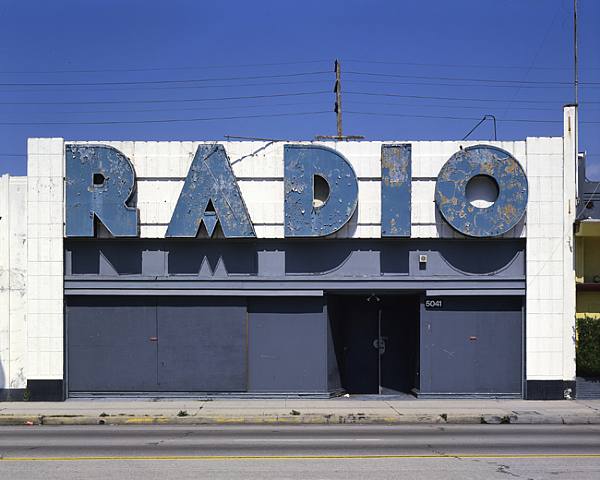
This is the Los Angeles that John Humble loves... this is the Los Angeles that John Humble photographs. From the roof view of his 1970's van (John built a platform on his van's roof to accommodate his large-format camera and provide a better view for recording the street and its context), from the freeway overpasses, from the water... his handiwork and craftsmanship... what he makes... serves as a window into this feeling of "L.A.". It is a certain and loving view into its character, into its beauty. Like Eggleston with his beloved South, this is a personal diary into the sprawl, a look at the skin of the city… a view into the vast ocean of concrete ugliness… no, a celebration of the ugliness... a beauty that is this concrete ugliness, an ugliness that is beauty. In the concrete and in the metal, in the waterways (In the late 1990s Humble began documenting the Los Angeles River, charting its 51-mile course from the headlands in Canoga Park to its mouth in Long Beach) and in the electric towers, in the foliage and in the steel bars... in the man made, in the man-nature and in the feeling that comes in viewing these things... in the lives that live amongst these things, amongst this concrete... this is a living monolith.

Doug Rickard (American Suburb X).


I never photograph the places I love the most. WHY. Because I think they loose all of their meanings when I photograph them. Like I cant capture what they mean to me. I dont feel I've done them justice. Saying that, how many places could I photograph as truly meaningful? My images strip away something, they're not de-humanised per se as the whole point of many of them (aside being documents) is to show the human impact..?! maybe. Atget has always been my photographic hero. Humble has been doing a similiar thing (well, so has Eggleston, Sally Mann, Richard Billingham etc etc etc) documenting something that means alot to him. I cant make that connection. I need new places, new things to photograph. without any memories. does this affect my work? how? for better.. or for worse...

For the Mishka Henner brief (M.H.B.) I've initially chosen David Baileys NW1. I like it's simplicity and its intimacy. The simplicity? Yes. I can manage this. The intimacy? PROBLEM. Do I engage with the subject?